
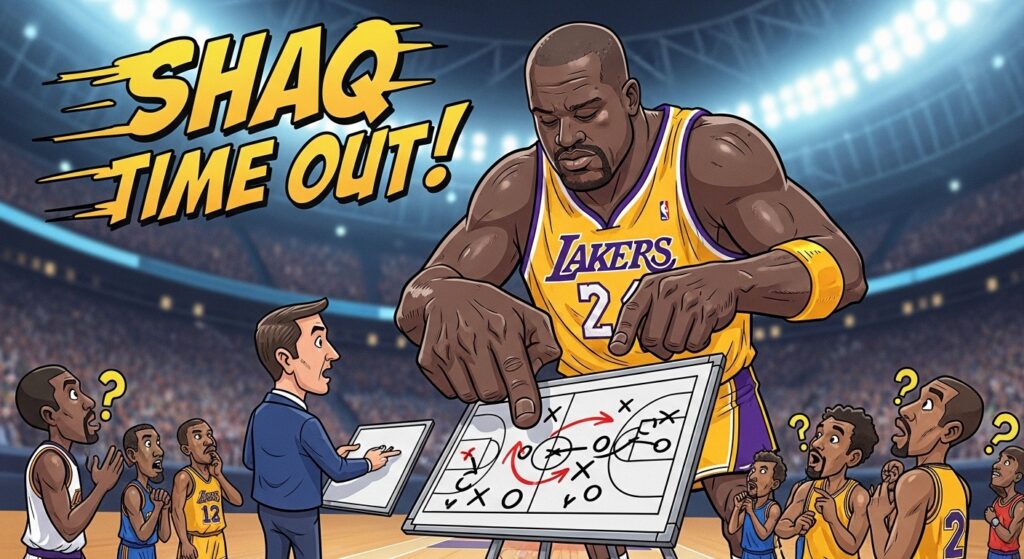
Basketball is a game of strategy, skill, and sometimes, sheer unpredictability. As the sport evolves, so do the tactics employed by coaches and players alike. Among these innovations stands a strategy that has taken the basketball world by storm: ‘Shaq Time Out.’ Named after the larger-than-life NBA legend Shaquille O’Neal, this tactic has sparked conversations in locker rooms and sports bars across the globe. But what exactly is ‘Shaq Time Out,’ and why is it capturing attention? Dive into this blog as we unravel its origins, benefits, pitfalls, and real-world applications in modern basketball strategy. Whether you’re a die-hard fan or just curious about how today’s teams are changing their game plans, there’s something here for everyone!
The Origins and Evolution of the Strategy
The origins of ‘Shaq Time Out’ can be traced back to the larger-than-life personality of Shaquille O’Neal. His playing style was bold and aggressive, often forcing defenses to adapt rapidly. Coaches began recognizing the power of tactical pauses during games.
As teams studied his dominance, they realized that taking timeouts strategically could disrupt opponents’ momentum. This led to a deliberate approach in using breaks for not just rest but also as psychological tools.
Over time, ‘Shaq Time Out’ evolved into a systematic part of game strategy. Coaches integrated it into their playbooks as a way to reset and refocus both players and fans alike.
This evolution reflects how basketball continually adapts with its stars shaping tactics while influencing how coaches manage gameplay dynamics today.
Advantages and Disadvantages of Using ‘Shaq Time Out’
The ‘Shaq Time Out’ strategy offers several advantages that can enhance a team’s performance. For one, it disrupts the opposing team’s momentum. By forcing them to adjust their game plan, coaches can create opportunities for scoring.
Additionally, this tactic allows teams to manage player fatigue effectively. Substituting key players during critical moments helps maintain energy levels when it matters most.
However, there are drawbacks too. Not all players thrive under such pressure. Some may struggle to adapt quickly, leading to missed plays or miscommunication on the court.
Moreover, over-reliance on this strategy could backfire. Teams might become predictable if they use it too frequently. Opponents will catch on and develop counter-strategies that exploit these patterns.
Finding the right balance is crucial for coaches aiming to maximize the benefits while minimizing potential pitfalls associated with ‘Shaq Time Out.’
Case Studies: Teams that have Successfully Utilized ‘Shaq Time Out’
The Boston Celtics are a prime example of effectively employing ‘Shaq Time Out.’ During their championship run in 2008, they strategically used this approach to disrupt opponents’ momentum. By calling for timeouts at critical junctures, they regained focus and maintained pressure.
Another standout case is the Miami Heat. Under Coach Erik Spoelstra, the team embraced ‘Shaq Time Out’ during the 2012 playoffs. This tactic allowed them to recalibrate defensive schemes against fierce competitors like the Oklahoma City Thunder.
The Golden State Warriors also tapped into this strategy during their record-setting season in 2016. Coach Steve Kerr’s timely timeouts often halted rival scoring runs and provided his players with necessary rest while keeping energy levels high.
These teams leveraged ‘Shaq Time Out’ not just as a break but as an integral part of their game plans, showcasing its potential impact on winning games when executed thoughtfully.
Criticisms and Controversies Surrounding the Strategy
Critics of the ‘Shaq Time Out’ strategy often point to its potential for disrupting team chemistry. The abrupt pauses can throw off momentum, leaving players disoriented on the court.
Some argue that it places too much reliance on one player’s strengths. When teams overly depend on a dominant figure like Shaquille O’Neal, they risk neglecting other key players and strategies.
In addition, there’s concern about how opponents may adapt. Teams watching film might find ways to counteract this tactic, diminishing its effectiveness over time.
Furthermore, not every player possesses Shaq’s unique skill set or physicality. This raises questions about whether such an approach is sustainable across different rosters and playing styles.
Pundits debate whether it’s merely a gimmick rather than a legitimate tactical evolution in basketball strategy. As discussions continue around ‘Shaq Time Out’, these controversies shape its perception in modern hoops culture.
The Future of ‘Shaq Time Out’ in Basketball
The future of ‘Shaq Time Out’ in basketball is ripe with possibilities. As teams continue to analyze game data and player performance, this strategy may evolve even further. Coaches are now blending traditional methods with modern analytics.
Moreover, younger players are adapting quickly to innovative tactics. They possess a unique understanding of the game’s flow, allowing them to implement ‘Shaq Time Out’ more effectively. This could lead to its integration as a staple in team playbooks.
With an increased focus on conditioning and versatility among athletes, the application of this strategy could change dramatically. Teams might find new ways to employ it during high-pressure moments or critical plays.
As fan engagement grows, so too does the need for strategies like ‘Shaq Time Out.’ The excitement surrounding these tactical shifts keeps audiences engaged while also challenging coaches to think outside the box.
Conclusion: Is ‘Shaq Time Out’ Here to Stay or Just a Passing Trend?
The landscape of basketball is constantly evolving. Strategies come and go, but some leave a lasting impact on the game. ‘Shaq Time Out’ is one such strategy that has grabbed attention in recent years.
It’s clear that teams have used it to their advantage, often leading to surprising victories or shifts in momentum. Coaches and players alike are adapting their training regimens and playbooks around its principles. This flexibility may indicate a growing acceptance of the strategy within professional circles.
However, resistance remains among traditionalists who view it as an unnecessary gimmick. They argue that relying too heavily on timeouts can disrupt team rhythm or lead to overthinking plays during critical moments.
As we look ahead, the future of ‘Shaq Time Out’ will hinge on how effectively teams integrate it into their overall strategies while addressing criticisms head-on. Will this innovative approach become a staple in modern basketball or fade away like many trends before? Only time will tell if ‘Shaq Time Out’ solidifies its place in the annals of basketball history or becomes just another footnote among fleeting tactics.