
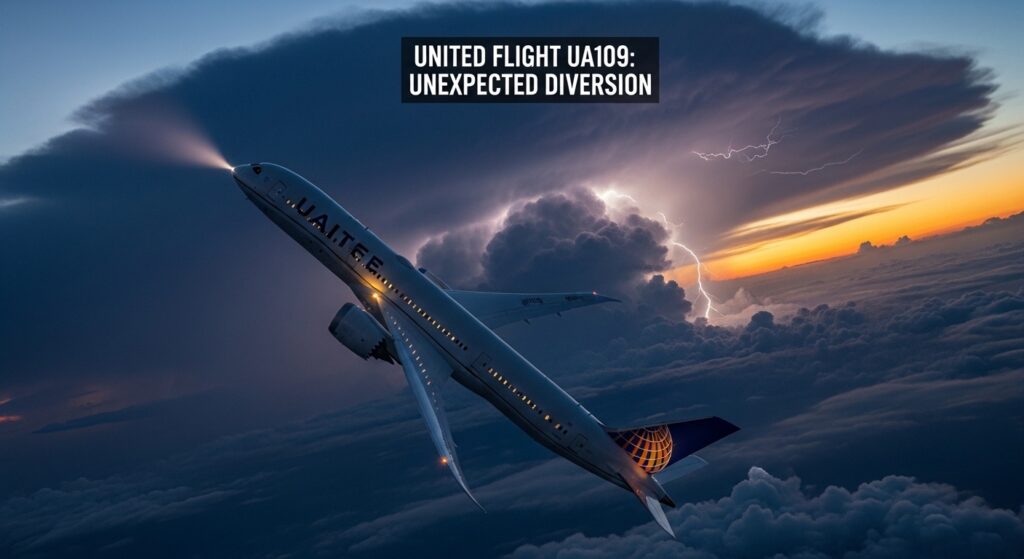
Air travel is built on precision, planning, and safety. However, even the most carefully organized flights can face unexpected circumstances. The topic of united flight ua109 diversion has generated interest among travelers and aviation observers who want to understand why diversions occur and what they mean for passengers.
A flight diversion is not uncommon in commercial aviation. In fact, it is often a proactive safety decision made by pilots and airline operations teams. This article explores what a diversion involves, the possible reasons behind it, and how airlines manage such situations.
Overview of United Flight UA109
United flight UA109 is operated by United Airlines, one of the largest commercial carriers in the world. Like many scheduled routes, UA109 connects major cities and operates under strict aviation safety regulations.
When discussions arise around a united flight ua109 diversion, it typically refers to a situation in which the aircraft was redirected from its original destination to an alternate airport.
What Is a Flight Diversion?
A flight diversion occurs when an aircraft changes its planned destination and lands at a different airport. Diversions are made for safety and operational reasons. They are not considered emergencies by default, although some may involve urgent situations.
Airlines and flight crews are trained extensively to handle diversions efficiently. Every flight plan includes alternate airports in case landing at the original destination becomes unsafe or impractical.
Common Reasons for a Diversion
There are several possible explanations behind a united flight ua109 diversion or any similar event:
1. Weather Conditions
Severe weather is one of the most common causes of diversions. Thunderstorms, heavy snowfall, fog, or strong crosswinds can make landing unsafe. In such cases, pilots may choose a nearby airport with clearer conditions.
2. Medical Emergencies
If a passenger or crew member experiences a serious medical issue, the aircraft may divert to the nearest suitable airport to provide immediate medical assistance. This is a precautionary measure prioritizing human life and safety.
3. Mechanical or Technical Concerns
Modern aircraft are equipped with advanced monitoring systems. If a system alert indicates a potential mechanical issue, pilots may decide to divert as a preventive step. Even minor technical irregularities are taken seriously.
4. Air Traffic or Airport Issues
Sometimes congestion, runway closures, or operational disruptions at the destination airport can lead to a diversion. In such cases, the decision is logistical rather than safety-related.
Passenger Experience During a Diversion
When a diversion occurs, passengers are usually informed by the captain or flight attendants. The crew provides updates explaining the reason for the change and what to expect upon landing.
After landing at the alternate airport, several outcomes are possible:
-
The aircraft refuels and continues to the original destination.
-
Passengers are rebooked on another flight.
-
The airline arranges ground transportation if feasible.
Airlines typically assist with accommodations or meal vouchers if significant delays occur.
Safety Protocols and Aviation Standards
The aviation industry operates under strict global safety regulations. Diversions are part of standard contingency planning. Pilots undergo continuous training in simulator environments where they practice emergency scenarios and decision-making under pressure.
A united flight ua109 diversion should be viewed through this safety-first lens. Choosing to divert often demonstrates responsible command rather than a sign of danger.
The Role of Communication
In modern aviation, communication is key. Airlines monitor flights in real time through operations control centers. These centers coordinate with pilots, air traffic control, and ground teams to ensure that diversions are handled smoothly.
Passengers can often track flight status updates through airline apps or airport information systems. Transparency helps reduce confusion and maintain trust during unexpected changes.
Why Diversions Are Not Rare
Although diversions may sound dramatic, they are not unusual in commercial aviation. Thousands of flights operate daily worldwide, and a small percentage may divert for various reasons. The system is designed to handle such changes efficiently.
The discussion around united flight ua109 diversion highlights how dynamic air travel can be. Flexibility and rapid response are built into airline operations.
Conclusion
A united flight ua109 diversion represents a routine safety or operational adjustment rather than an automatic cause for alarm. Whether prompted by weather, medical needs, or technical checks, diversions prioritize passenger and crew safety above all else.
Air travel remains one of the safest modes of transportation globally. When a flight changes course, it is typically a sign that established safety procedures are working exactly as intended.